Search This Blog


Roses (rose), batik is a rose that has more than one color. Flowers are produced from the intercross between local roses (tropical) with imported roses.
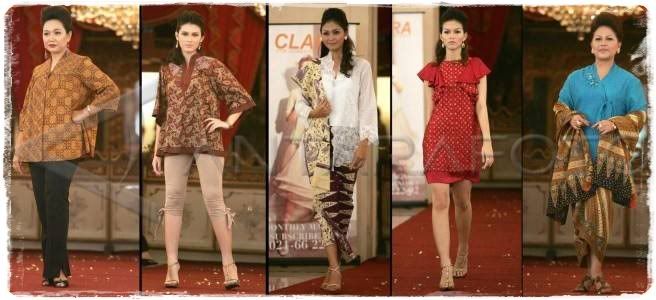
Weaving and batik is still an option for most of the Muslim fashion designer who shows his work in the arena of Jakarta Fashion & Food Festival, at the Harris Hotel, Kelapa Gading Jakarta, Wednesday (19 / 5).
This is in accordance with the selected theme JFFF 2010, namely "Heritageous", a new term was inspired by the beauty of the archipelago's cultural heritage.
Events held by the Employers Association of Indonesian Fashion Designers (APPMI) and this Summarecon displays the work of 12 Muslim fashion designer APPMI members from various regions, including West Java. Will be held tonight cocktail dresses.
The success of the month-long promotion of Indonesian crafts at Harrods seems to have spurred the Unity, Culture, Arts and Heritage Ministry to consider establishing trading houses to market batik in Europe.

Given that batik recorded more than a three-fold surge in export sales last year and was one of the best-selling products at the famous department store, the attention to this textile product is understandable. Moreover, given that the ins and outs of exporting can be a daunting task for local batik producers, most of whom are too new and too small to make it on their own, trading companies which link buyers and sellers can tap into the rising international demand for Indonesian batik. No doubt, without the promotion by Kraftangan Indonesia, the local batik makers and designers would have had great difficulty in displaying their collections at the high-end, high street shop in London. Neither would they have been able to travel to foreign trade exhibitions and fashion shows to profile their creations and promote their work without the support of government agencies and other organisations like the Batik Guild.
That said, however, while cottage and small enterprises like the batik industry need a helping hand from the government to flourish in the world market, it does not follow that the ministry should set up trading houses. Even though state ownership of enterprises no longer seems to be the bad idea that it was in the heyday of the market economy, it would still be bad business for a ministry devoted to the arts and culture to be involved in such an enterprise. To be sure, there is a potential for batik to become a commercial success in the international fashion industry. As much as the government has a role to play in providing the finance, technology and marketing to make this happen, the commercialisation of a traditional handicraft should largely be the work of others in the public and private sectors.

Of course, the potters and weavers need retail outlets to sell their wares, musicians and dancers need stages to perform, and the painters and sculptors need galleries to showcase their works. While the ministry should indeed continue to promote batik and other crafts and provide the spaces that the artisans and artists need to sustain their livelihood, it should nevertheless resist the temptation to stray too far. Its core business should be on the cultural rather than the economic value of the arts, on keeping the arts alive as a cultural heritage rather than on the commercialisation of culture.
These had to do with-the social position of the wearer - the occasion on which the batik was worn or used, in connection with the meaning and hope or wish symbolized by the motif. The cloth on the left is a detail of a kain panjang which was made in the workshop of Hardjonagoro in Surakarta in the early 80's. The motif combine influences of several region, but the overall style and the color are typical of Solo design The 'kain panjang' means 'long cloth'. It is a piece of cloth of approximately one by two and a half metre. It is used as the sarong, but the kain panjangis regarded as being more formal.
The motifs of the Solo design are related to the Hindu-Javanese culture: the Sawat symbol of the crown or highest power, the Meru symbol of mountain or earth, the Naga symbol of the water, the Burung symbol of the wind or upper world and the Lidah Api symbol of the fire. In Solo there were special rules about wearing of batik. 1) the social position of the wearer, 2) the occasion on which the batik was worn or used. Thiswas in connection with the meaning and hope or wish symbolized by the motif.
Semen including ancient patterns that contain mainly the eagle decoration, airplane, mirong and dollars all of which are stilasi (composition of) the eagle-decoration animals in Hindu myth, which in the past is a special decorative icons to the king and his family.
In the concept of Javanese culture, or the mountain Meru is also the center or bertunasnya blossoming plant varieties. The pattern that was then called the cement, which is based on the semi. There are many different patterns of cement, such as cement and cement gurdha Jolen.
Buketan batik

Buketan term must come from the bouquets (bunch / cluster) of interest, because this pattern is very easily identified by appearance or decoration, flower petals, with a particle leaves tendrils, wing butterflies and birds, or other small animals. Variety picture elements or motifs are arranged in such a way in the unity of harmony. Some forms of buketan, often appearing like a painting of flowers on Wastra batik. Buketan pattern found in many batik pesisiran, though also found in the interior.
Periphery batik
Periphery pattern called for decorative pattern generally consists of decoration or unique motifs used as "decorative edge" or "decorative bookmark" Wastra batik in general.

Over time, batik which was identical with feudalism in Java dam near the royal society, gradually began to popularize. Current batik trend undergone many developments, how the batik motif became more diverse, ranging from batik, batik cap, batik printing and batik prints. Currently, many traditional batik motifs found the composed re so very light and can be used for all circles.
Batik Indonesia women and men from various tribes liked to wear fabric decorated with batik patterns or own batik cloth.
Traditional batik motifs can be combined with an attractive batik motifs motives Sogan conventional way. Batik motifs can be combined with motifs of modern fabrics, such as lines, boxes and flowers. The combination motif made and cut according to their respective tastes.
The good news is, now words are familiar batik also known outside the country. Even foreign tourists bringing home batik as souvenirs. It's a pride as a nation that has a cultural identity. Now if they just admire the beauty of batik, then as owner of real batik culture, let more love batik products archipelago.
Complete your collection by shopping batik Batik Yogyakarta, the place for you to get a variety of quality batik collections at a cheap price!
The extent of the use of batik making party Wastra court issued a ban on the public to use a number of patterns and motifs by the community.
Both the court of Surakarta and Yogyakarta, this rule is relatively the same. Decorations forbidden in principle diagonal print. Some scientists attribute this to the impact of design or a diagonal slash. Until now, a taboo in the community to use machetes Solo damaged barong, cemukiran, and udan lyrical. In Yogyakarta, damaged barong machete is also a restriction pattern, other than aircraft and cement gundha great. Masihh there are many variations of patterns that should only be used kings and certain circles within the walls of the palace.
Among the people themselves is prohibited to use a certain pattern in a certain time. In a traditional wedding ceremony in Central Java, for example, damaged a machete motive would never wear a wedding, because it indirectly as the user expects the marriage will be damaged or destroyed. Likewise with machete suspect (based form keris stilasi) are considered to be too sharp and dangerous for the wedding day bliss.
Unique in West Java, this prohibition does not apply. Many times guests from Central Java was amazed watching the couple in West Java bride wore a patterned Wastra damaged or machete, machete machete form other at the wedding.
In a traditional Javanese wedding ceremony outside the palace walls, the bride and groom wore a batik-print sido mukti so good luck toward them (sido mukti means "may you prosper). Another variation in the pattern is the motive sido sido sublime ( "I hope you are exalted), sido compassion (may you be glorified) and wirasat sido ( 'bode well'). Sido designs are usually made sawitan (pairs) for the husband and wife.

In Central Java, for the funeral, people generally prefer dark batik Wastra, such as a patterned slobog or ferns. The concept of color is different from the concept adopted by the Chinese community in Indonesia using the white color to express grief or mourning. In Wastra batik, white color combined with a soft blue to a dull tone, but the bright blue-sharp avoided. For the Chinese bride, Wastra blue and white batik with swan motif. Blue and white symbol of mourning for the bride will leave her parents' house, while the swan is a symbol of happiness in marriage. There is also a batik pattern that is believed to be refused reinforcements, crime or disease. Another feature of the pie from Indramayu which is believed to have the power to cure disease. Similarly, the motif grimace from Central Java and East Java, which comes from the combination of word gering (pain) and sing (negative).
Different from other Indonesian batik motifs are generally expressed in the form of stilasi, Dutch batik motifs present in the form of tangible: Flowers, animals, airplanes, soldiers lined up to bear arms, and so on. Even many Wastra Dutch batik drawings showing fragments of European fairy tales such as the cap Red, Snow White and Hanzel and Gretel. Some Wastra presents Chinese cultural influence, such as the pattern of Goddess Hsi Wang Mu, the pattern of a circus scene and even puppets.
Than just ordering Wastra batik to the craftsmen or merchants there, later Dutch batik made by the Netherlands in Indonesia. Iwan Tirta Batik book, A Lakon, and Abdullah H. Santosa b
atik book, "Age and Environmental Impact" called Carolina Josephina von Franquemont as a forerunner, who founded the company in Surabaya in batik in 1840 who later moved his business to Semarang. He is famous with the discovery of green vegetable dye color-fast, a substance that became known as the green franquemont.Iwan and Santosa also mention other pioneers, namely, Carolina Catharina van Oosterom, the products known as batik batik Panastroman (from the van Oosterom), created in Semarang, and then moved to Banyumas with patterns that many pen display
Do the following to your view in harmony with using batik.
1. Choose a batik fashion show in accordance with formal, casual, to work, shopping, or event
family.
2. Instead, solid match with a matching batik motif that berdetail light (plain color and cutting
simple) to get a balanced view.
3.Gunakan matching accessories with batik.
4.Kenakan simple accessory for your high activity
5.Motif batik can be combined with striated motifs or boxes
Has 6.Bagi neck, try wearing mandarin collar to your neck of the enchant terliat
7.Bukan a masala match two batik motifs in one equivalent. Find the colors that match the motif
almost similar
8.Baju can dipadupadankan batik skirt or jeans.
9.Bagi men, use simple motifs and colors for formal events.
10.Pria can wear accessories that contain metal and to sweeten the appearance of skin.
Do:
To be coherent visible equivalent in berbatik matching, you should avoid the following things are:
Open 1.Hindari cutting patterns for kekantor event.
Batik motifs 2.Hindari large and conspicuous for that big.
White 3.Bagi, avoid the use of brightly patterned batik because it seems less elegant
4.Bagi you who wear the hijab, no need to use batik scarf if it is wearing batik motifs.
5.Bagi who want to look mature and elegant avoid bright batik motif.
6.Hindari collar model that has bubbled for a short neck that would give the impression you are getting shorter neck.
7.Untuk men should avoid short-sleeved batik shirt at a formal event
8.Jika have big breasts, avoid large batik motif and lined at the chest. This gives management more kesarn chest.
9.Hindari excessive use of accessories that eliminate the impression your batik.
Here are tips for caring for batik cloth that you can do:
1. Batik Wash with mild soap lerak of fruit, already available in a practical package and the price murah.Caranya: Pour 1 measure (bottle cap) into half a bucket of liquid water, stirring. Enter 3-4 pieces of batik clothes, leave 5-10 minutes, wash batik lembut.Bilaslah movement with clean water, should not be blackmailed and drying the shady place. Can also use the fruit or leaves glued lerak soaked hangat.Caranya water, knead the fruit or leaves glued lerak until foaming, then add enough water, and ready to wash the batik. Lerak fruit aroma could prevent the emergence of animals that can damage the fabric.
2. Do not use detergent to wash the batik and do not rub. If the stain is not too dirty dibatik so simply washing with warm water. But if the stains, wash with soap batik lerak. If the stain is still stubborn, remove the lemon peels provide on the spot.
3. Do not wash batik using bleach and use the washing machine
4. After the dirt away, drying batik in a place not exposed to direct sunlight, enough diangin-aired or sunbathe in the shade. To note, too, do not squeeze, let it dry naturally.
5. Do not iron directly batik cloth. If the batik look very good, spray some water onto the batik cloth, then put a piece of cloth above the base, just ironed.
6. If you want to give fragrance and softener on batik cloth, do not spray directly on fabric. Previously, cover with newspaper had batik, a new spray deodorant and liquid fabric softener.
7. Do not spray perfume or cologne directly to batik cloth, batik silk primarily with natural dyes.
Batik clad i1u phone features gsm and gsm-2MP camera, for connectivity, batik Elzio network supports GPRS / EDGE class 12. For the screen. Elzio installing 2.2 QVGA LCD. (TFT). For entertainment fitu game Elzio offers 5 attractive and FM series radio.
Fashion designers who make the community was impressed with the work of which is Edward batik / Edo Hutabarat. In Edo's bold design nunjukin casual clothing with brightly colored batik cloth. Motive he bravely hit into a natural thing, bringing together the full batik motifs accented with polka-dot or striped it looks more beautiful and enjoyable. His work with the wide and minidress bersiluet shorts up like a balloon that is characteristic of Edo design. Game patchwork detail on some of his collection, emphasized the creative side of fashion designing. Batik motifs used simple fact, more likely based on simpler with young people freedom.

Batik is now used for casual events such as trips to the beach or can also to go to the mall. The model not just a batik shirt or blouse, but a lot of household industries crafters make T-shirt with batik motifs. But do not get me wrong motives batik shirts not just flowers, plants, especially the puppet, but his motives dare combine traditional style with modern images such as Harley Davidson and VW cars with batik motifs.
Batik Inspirations truly presents in an art form the richness of batik. Between eM.K's professional photography and QuaChee's unique conceptualising; batik is given Life! Batik Inspirations also speaks strongly of the inspirational journey of a resourceful talented young man who embarks confidently into a Life of Significance. This Significant Life is opening petal by petal into full bloom in the near future touching lives many times over.2. Form of images / designs on batik there is no clear repetition, so the image can appear more flexible with the size of the line pattern can be relatively smaller than the printed batik.
3. Batik pictures can be seen on both sides of the fabric appear more flat (see-through back and forth) specifically for the delicate batik.ger than the color of the stroke pattern (putihan batik / tembokan).
4. Basic color fabrics generally youn
5. Each piece of the picture (decoration) which is repeated on the cloth would not normally have the same shape and size. Unlike the printed batik is likely to be exactly the same between one image with another image.
6. The time needed for batik making relatively longer (2 or 3 times longer) compared with printed batik making. Workmanship delicate batik can take 3 to 6 months.
7. A canting tool is relatively cheaper price ranges from Rp. 10.000, - to Rp. 20,000, -/pcs.
8. Batik selling price is relatively more expensive, because of the generally better quality, luxurious and unique.